Retell AI vs open-source isn’t just a feature comparison, it’s a choice between proprietary platform, hidden pricing vs full control through self-hosting.
For non-technical users, platforms like Retell AI (g2 avg rating 4/5) are difficult to manage due to complex setup, an unfriendly UI, and customer support limited mainly to Discord. Hidden platform fees bundled into voice engine costs further reduce trust and reliability.
This blog helps you choose “which model is smarter”, because voice agents get expensive fast, and you need a platform decision you won't regret in 3 months.
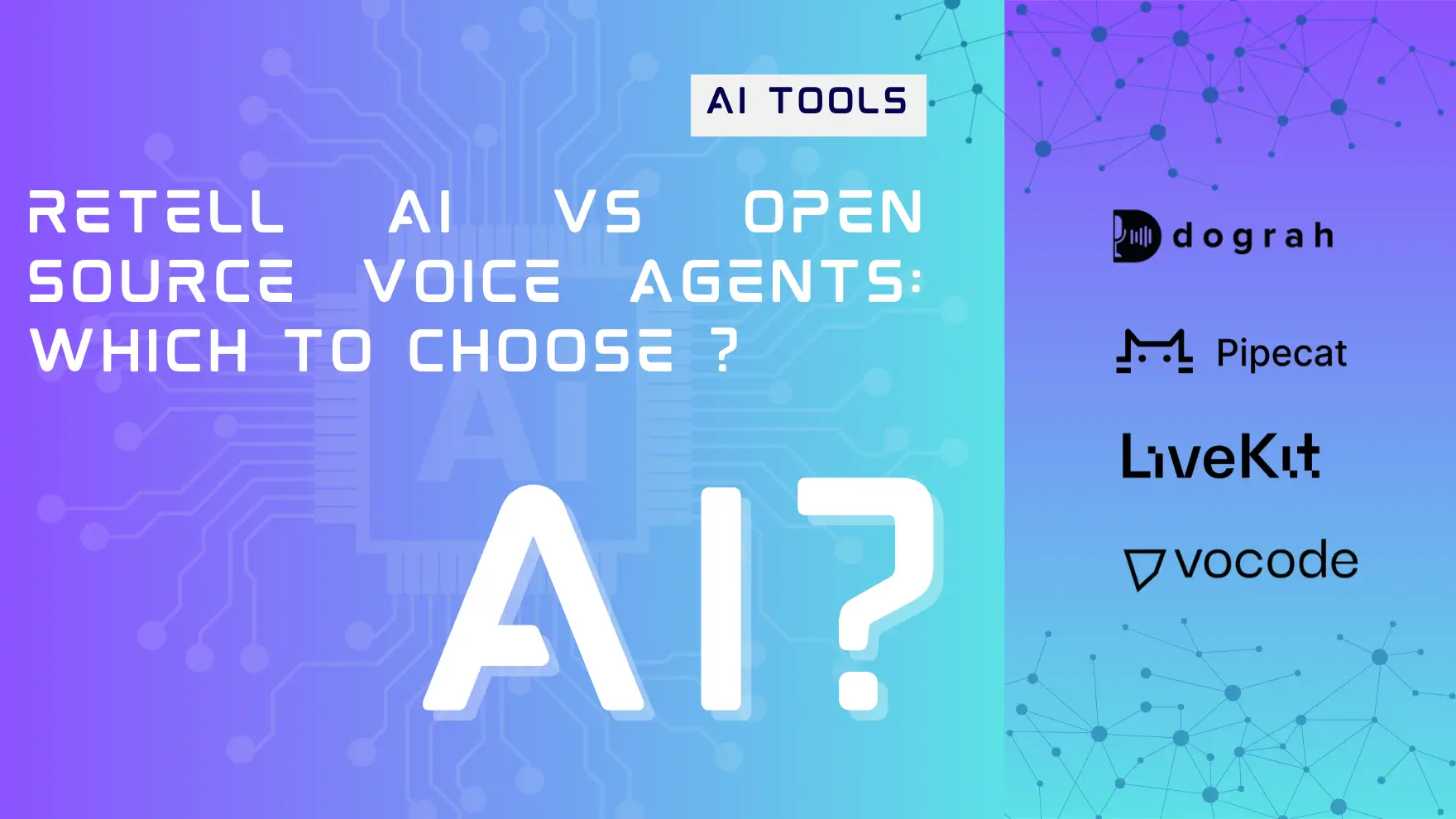
Which to choose : Managed SaaS voice agents vs self-hosted OSS
Retell ai is a closed platform where you pay for convenience and "it just works." Open-source or self-hosted setups are more like a stack: tools like Dograh combined with telephony, STT/TTS, LLM APIs, and your own logging and controls, giving you more flexibility and ownership. Make it short
Examples of building blocks you'll see in open stacks :
- Dograh : open-source platform with visual workflows.
- Pipecat : Pipeline orchestration, creating a clear, structured path for data flow in voice AI applications.
- Livekit : Framework for building real-time voice and multimodal conversational agents.
- Vocode : Tools and abstractions for building voice applications.
Who Retell is best for vs who open source is best for
Below is the quick overview comparison of Proprietary (Retell AI) vs Selfhosted (Dograh AI, LiveKit, Pipecat, Vocode).
Choose Retell AI if:
- You have a technical background.
- You are comfortable with discord customer support.
- Your compliance needs are "standard SaaS is fine".
- You're okay paying per-minute platform fees for simplicity.
Choose open-source/self-hosted if:
- You're hitting real volume and the bill is creeping up.
- You need GDPR/HIPAA/PCI-style control.
- You need deeper integrations than "whatever connector exists".
- You want to avoid vendor lock-in.
- You want 60-70% potential savings by removing platform fees (volume-dependent).
Table of Contents
- Myths to Ignore Before you Decide
- Side-by-Side Comparison: Retell AI vs Open-Source (Self-hosted) Voice Agent Platform
- Cost: Retell AI pricing vs open-source true TCO (and when SaaS gets expensive)
- Security, compliance, and data control (GDPR/HIPAA/PCI): the real differentiator
- Open-Source Alternatives Landscape (Concise, Criteria-driven - not a directory)
- Decision framework: choose Retell AI vs Choose Open Source (plus a hybrid path)
- Where Dograh fits (Open-Source + Drag-and-Drop): a practical “best of both worlds” option
- Final Takeaway
- FAQ
Myths to Ignore Before you Decide
Let’s debunk all the myths, help you choose the best Open source voice ai agent and you’ll save weeks of confusion.
Myth 1 : "Open-source voice agents need GPUs and ML ops".
Reality : Most setups just call STT/TTS/LLM APIs, no model training or GPUs needed.
In practice, the real challenges are streaming stability, network routing, retries and failover and managing call state, not ML infrastructure.
Myth 2 : "SaaS platforms are always cheaper than self-hosting".
Reality : SaaS Per-minute fees add up fast, and costs can spike at scale.
Voice minutes grow quickly for support, scheduling, collections and outbound calls so teams start looking at true TCO (Total Cost Ownership) and break-even points.
Example (Retell AI pricing per minute): $0.10 total
LLM $0.012 + Voice $0.070 + Telephony $0.015.
Myth 3 : "Self-hosted automatically means more secure".
Reality : Self-hosting gives you full control and avoids vendor lock-in, significantly reducing the risk of security and compliance breaches.
Side-by-Side Comparison: Retell AI vs OS (self-hosted) Voice Agent Platform
The comparison table below answers nearly 80% of your questions at a glance. Although the answer is simple, SaaS ships faster, meanwhile open source is more flexible and usually cheaper once volume is real.
2 Quick Takeaways
- Retell is usually the fastest path to a working demo and developers.
- Open source wins when you hit cost, compliance or custom integrations.
Real-time performance: what users actually feel (TTFW, barge-in, interruptions)
Voice agents feel natural when they know when to start and stop. Platforms like Dograh AI support real-time barge-in and low TTFW (time to first word), enabling smooth, human-like conversations without awkward pauses.
What is voice agent latency (TTFW and barge-in) ?
Latency in voice agents isn't one number. It's a chain:
- TTFW: how fast the agent speaks back.
- Barge-in response: how fast the agent stops talking when interrupted.
- Jitter handling: can it survive messy networks.
- Turn-taking: does it talk over people.
Target ranges (practical, not academic)
- TTFW: ~500-800ms is a solid goal for natural feel.
- Barge-in stop time: aim for sub-second interruption handling.
- Drops/errors: you want a visible error budget, not gut feel.
Most open source platforms don't need GPUs because they're not running models locally. They call external APIs (OpenAI/Groq, Deepgram, ElevenLabs/Cartesia, and no vendor lock-in. So with fast providers, both SaaS and open stacks can land in a similar latency range.
What actually moves the needle :
- Put STT/TTS/LLM in the same region as your media server
- Use streaming STT, not batch
- Tune VAD endpointing
- Keep prompts short and tool calls tight
- Add retries and fallbacks for STT/TTS timeouts
Build & iteration speed:
From prototype to production, Speed-to-first-call is not the same as speed-to-production.
Retell-like SaaS is great at:
- Fast onboarding for developers
- Fewer moving parts
- Built-in telephony and voice stack
Open Source is better when production means:
- Custom call routing
- Custom auth
- Custom data flows
- Custom compliance controls
Integrations and extensibility:
CRMs, custom software, and agent behavior control. This is where open source usually wins.
Typical integration needs I see:
- Create/update leads in a custom CRM
- Look up subscription status in an internal DB (Database)
- Book slots in a scheduling system
- Trigger refunds or account actions
- Escalate to humans with context
SaaS connectors help until they don't. Then you're stuck inside their limits.
Open Source gives you:
- Webhooks everywhere
- Custom tool calling
- Custom routing and fallbacks
- Custom multi-agent workflows (useful for reducing hallucinations)
Dograh in particular is built around:
- Plain-English workflow edits
- Multi-agent decision trees
- Extracting variables from calls for follow-ups
Cost: Retell AI Pricing vs Open- Source
True TCO (Total Cost of Ownership) shows when SaaS stops being cheap, convenience turns into ongoing platform fees that add up and can’t be ignored.
What is true TCO for AI calling ?
True TCO is what you actually pay to run voice agents reliably. It includes:
- Platform fees
- Usage (minutes + tokens)
- Infra
- Monitoring
- Engineering time
- Compliance work
- Incident response
Note: If you only compare per-minute pricing, you'll pick wrong.
Retell AI pricing components (what to look for, even if prices change). Retell AI pricing (and most SaaS voice agent pricing) usually has layers.
Watch for:
- Platform fee (the Retell platform margin)
- Per-minute usage (inbound/outbound)
- Add-ons (features, extra voices, recording, analytics)
- Concurrency limits (how many calls at once)
- Support tiers (SLA, dedicated support)
Even if a pricing page changes, the structure rarely does.
Also watch for:
- Overage pricing
- Bundled minutes vs pay-as-you-go
- Data retention pricing (often buried in enterprise tiers)
Open-source cost model:
No platform fee. Then the user pays only for the parts he/she chooses.
Simple monthly cost formula
Total monthly cost = Telephony + STT +TTS + LLM
If you're deciding now, here's the honest version: savings depend on minutes, provider choices, and how mature your ops are. At mid-scale, platform fees start to matter. And at high volume, removing the platform fee can cut total cost by 60-70% in the right setup.
Retell AI Pricing Breakdown
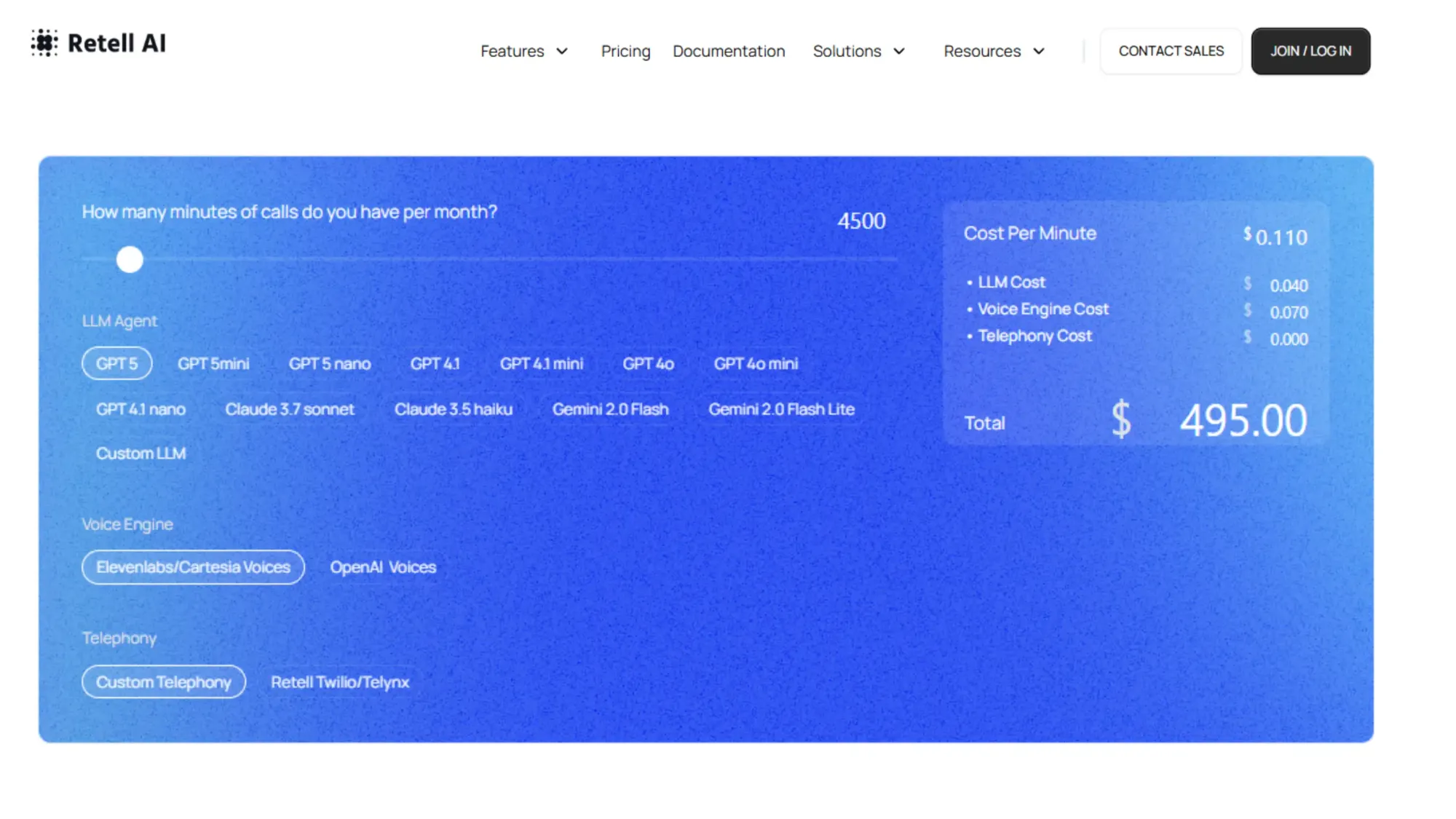
Cost breakdown for 4,500 monthly Retell AI calls using GPT-5 LLM agents, ElevenLabs/Cartesia voices, and custom telephony.
Hidden Cost Checklist :
- Overage pricing surprises
- Concurrency caps at peak hours
- Vendor lock-in (flows, logs, tooling)
- Data export limits
- Enterprise compliance as upgrade-only

Security, Compliance and Data Control (GDPR/HIPAA/PCI): The Real Differentiator
If you're in healthcare, fintech or EU markets, this section helps you make the right decision.
What is data residency for voice AI ?
Data residency ensures that call audio, transcripts, and logs remain stored in the required geographic region.
For many teams, it's non-negotiable:
- EU-only processing for GDPR
- Specific cloud regions for internal policy
- Own private cloud (VPC) or on-premises infrastructure
Threat Model: Where Voice-Agent PII Leaks Actually Happen
Voice calls contain PII, and leaks usually happen in boring places. In real voice agents, users say:
- Names, Emails, Phone numbers
- Addresses
- Order numbers
- Medical details
- Payment hints ("my card is...")
Data flow (simple map):
- Audio stream > STT > transcript
- Transcript > LLM prompt/tool calls > response text
- Response > TTS > audio
- Everything > logs, analytics, storage
Where leaks happen:
- Stored transcripts without retention limits
- Logs capturing full prompts with PII
- Vendor dashboards accessible too broadly
- Poorly scoped API keys
- Recordings stored forever by default
Note : Third-party platforms increase exposure surface. That GDPR-style risk becomes real fast.
GDPR requirements like data residency, retention, and audit logs often push teams to self-host. Self-hosting doesn’t automatically make you GDPR-compliant, it just makes compliance easier if you set up the right controls.
Open-Source Alternatives Landscape (Concise, Criteria-Driven - not a Directory)
Voice agent building blocks: what counts as a "platform" vs a "framework".
Platform typically includes:
- Workflow builder
- Deployment options
- Integrations
- Monitoring hooks
Framework typically gives:
- Primitives for STT/LLM/TTS pipelines
- Streaming orchestration code
- Examples and SDKs
Real-time transport matters:
- WebRTC/media servers
- Jitter buffers
- Reconnection logic
Credible Open-Source Options (GitHub) and What Each is Best at ?
Pick based on your bottleneck: workflows, real-time media, or orchestration.
- Dograh : Best for open-source drag-and-drop voice workflows, 2 min launch, self-hosting, no vendor lock-in.
- LiveKit : Best for real-time media + agent sessions. LiveKit lists plans including Build ($0/month), Ship ($50/month), Scale ($500/month), plus Enterprise, and includes 1,000 free agent session minutes/month with no credit card needed (LiveKit). But it's a media layer, not a full business workflow platform by default.
- Pipecat : Best for pipeline orchestration for real-time multimodal agents. But more engineering assembly, less out-of-box product UX.
- Vocode (GitHub) : Best for an unopinionated agent framework that plugs into STT/LLM/TTS providers. But you'll need to build more of the platform pieces yourself.
Decision Framework: Choose Retell AI vs Choose Open Source
Choose Retell AI if... (hosted ops, support/SLA, lower engineering appetite).
- You are comfortable with proprietary platform
- You want hosted reliability
- You don't want to own real-time infra
- You can accept vendor constraints
- Your compliance needs are basic
- Your volume is low-to-medium (for now)
If you're prototyping, this can be the right move. Just don't assume you'll stay here forever.
Choose open-source/self-hosted if... (cost at scale, compliance, deep customization)
- You want to remove per-minute platform fees
- You need GDPR/HIPAA/PCI-style controls
- You need VPC/on-prem or strict residency
- You need deep custom CRM/internal tool integrations
- You want to modify behavior and routing deeply
- You want to reduce vendor risk
This is where 60-70% potential savings becomes realistic. It's not magic. It's removing the platform margin.
Where Dograh Fits (Open-Source + Drag-and-Drop): a Practical "Best of Both Worlds" Option
Dograh is for builders and non coders who want open-source control without rebuilding everything from scratch.
What is Dograh (open-source voice agent platform) ?
Dograh is an open-source voice agent platform with a visual builder.
It's designed as an open-source alternative to Retell/Vapi-style products, with:
- Self-hosting option
- Bring-your-own providers
- Workflow-first design
Dograh as an Open-Source Platform (not just a framework): What you get ?
From our current product direction, user get:
- <2 mins setup from zero to working voice bot
- No-code / visual flow builder with templates
- Real-time preview and testing
- Telephony integration via Twilio/Vonage or bring your own SIP trunk
- Custom prompts, responses, branding, styling
- Observability integration like Langfuse for transcripts + performance tracking
- Open-source: free to use as a platform, costs limited to vendors you pick
Dograh AI is also building Looptalk (an AI-to-AI testing suite). It's early, but the goal is simple: stress-test your bot with persona callers.
Example architecture : Dograh + telephony + STT/TTS/LLM APIs (low-latency stack).
Low latency is mostly about provider choice + streaming config, not GPUs.
Reference architecture:
Tuning knobs that matter:
- Run services in the same region
- Lower VAD endpointing delay carefully
- Use streaming everywhere (STT + LLM + TTS)
- Add jitter buffers and reconnect logic
- Instrument TTFW and barge-in as first-class metrics
Top Open-Source Retell Replacements: Featuring Dograh AI
Interested in leveraging Dograh for lead generation, cold calling or business automation ? Here’s a streamlined path to getting started, along with direct links to essential resources :
1. Dograh AI: Quick Start Demo
2. Run Docker Command
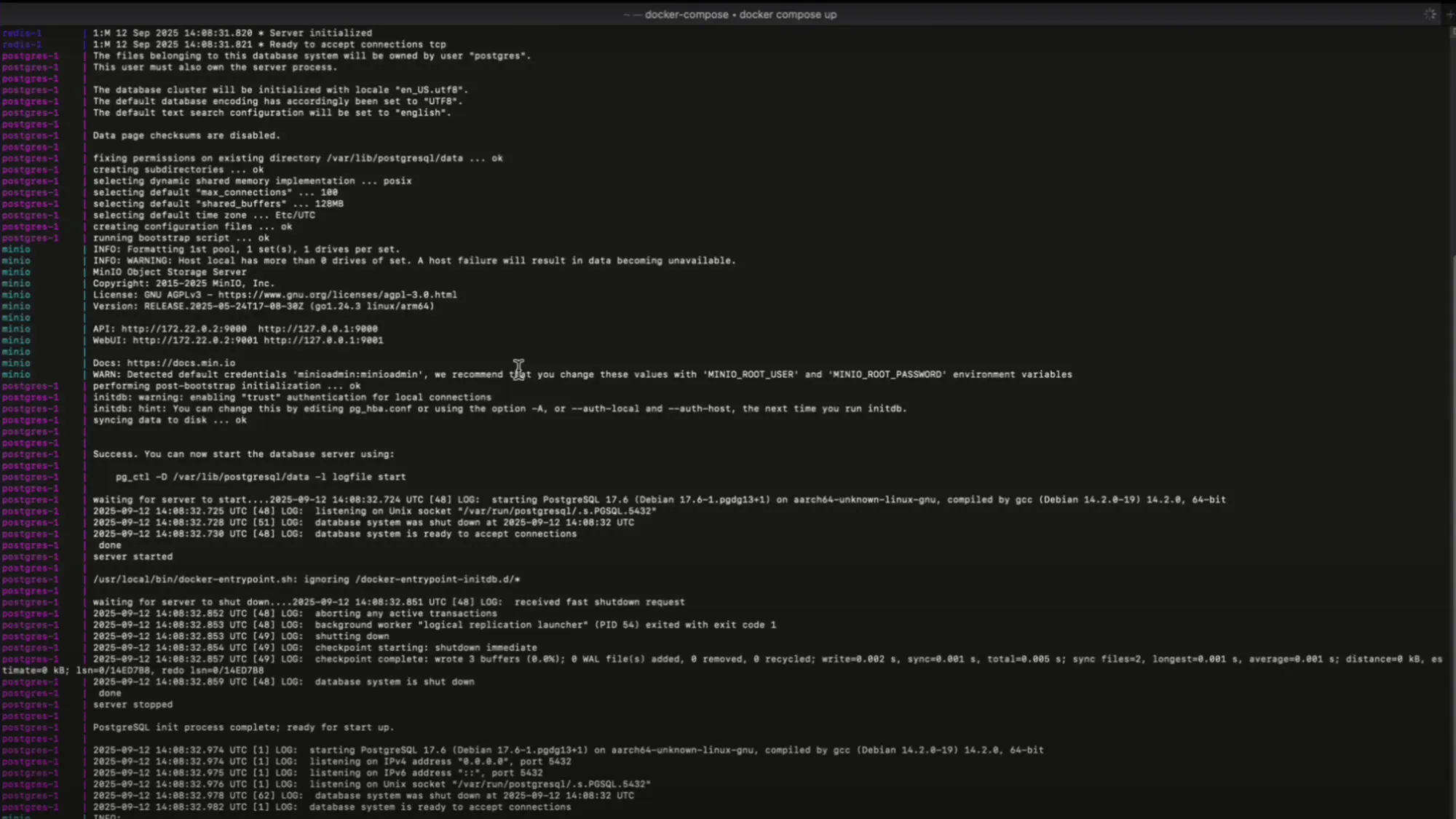
Download and Start Dograh first startup may take 2-3 mins to download all images
3. Quick Start Instructions
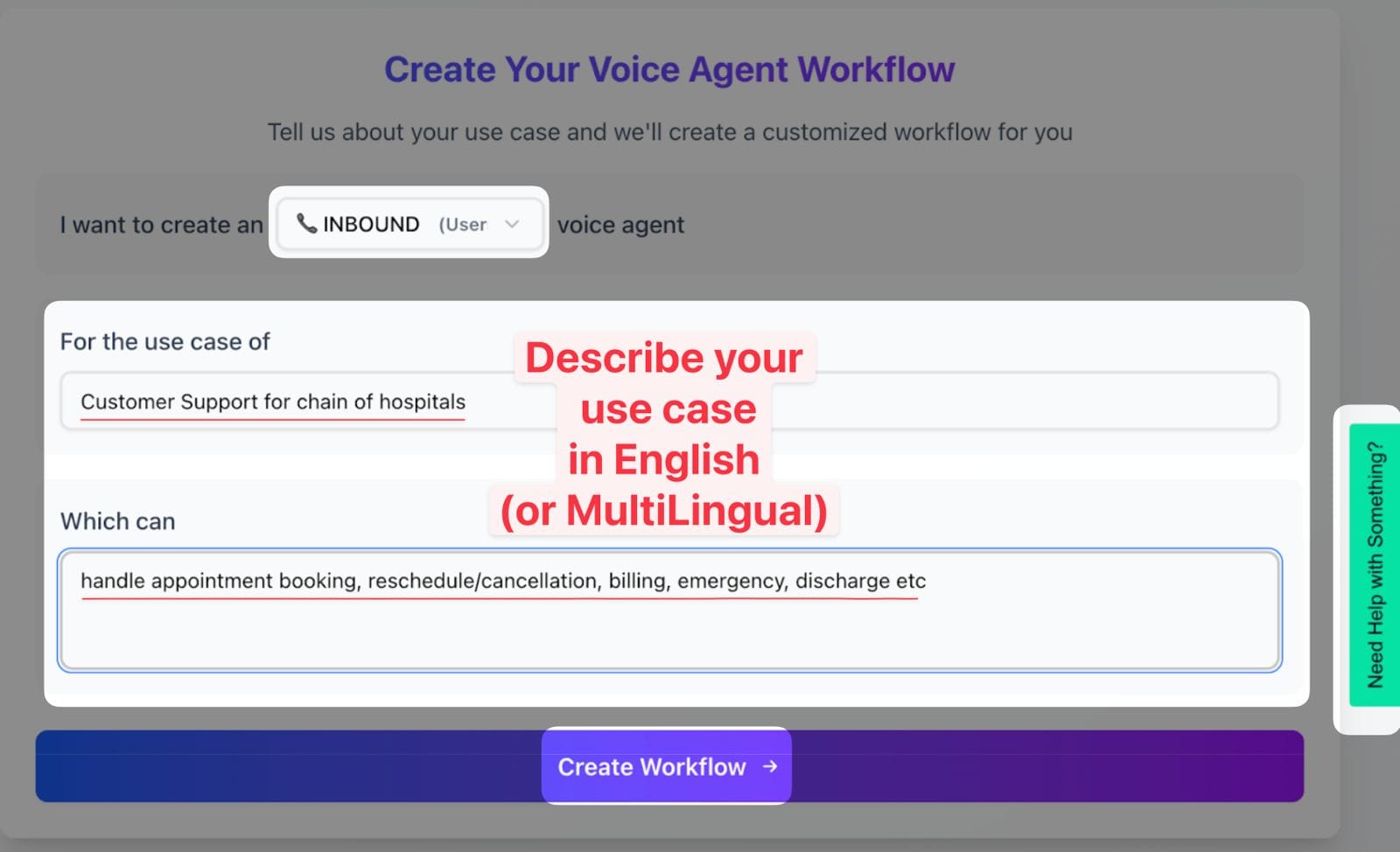
Describe use case
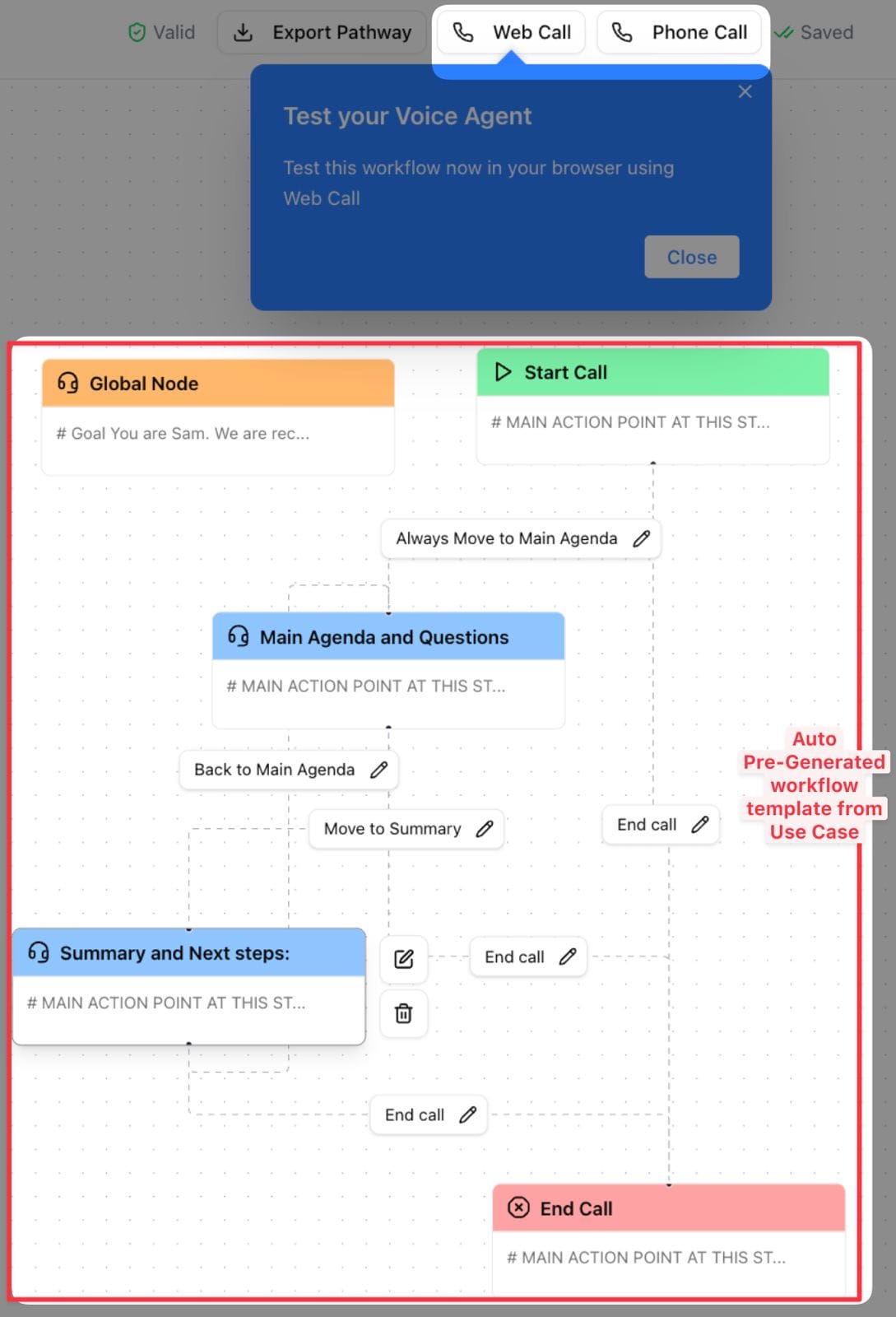
Auto-generated templates - test your bot and customize quickly
Step by step written guide to building and deploying your first voice AI Agent
- Open Dashboard: Launch http://localhost:3000 on your browser.
- Choose Call Type: Select Inbound or Outbound calling.
- Name Your Bot: Use a short two-word name (e.g., Lead Qualification).
- Describe Use Case: In 5–10 words (e.g., Screen insurance form submissions for purchase intent).
- Launch: Your bot is ready! Open the bot and click Web Call to talk to it.
4. Community & Support
Join Slack Community and discuss issue with Dograh experts :
5. Additional Resource
Final Takeaway
Retell AI is a fast on-ramp for developers. Open source is where user avoid paying a platform fee forever. If you're serious about volume, compliance, or deep customization, open-source platforms like Dograh are where the economics start to make sense.
The 60-70% savings claim can be real in the right volume band. It comes from removing platform fees and keeping only the providers you actually need.
Related Blog
- Discover the Top AI Communities to Join in 2025 for innovation and collaboration.
- Learn what makes Voice-Enabled AI Workflow Builders Effective in 2025.
- Discover how Making AI Outbound Calls Work: A Technical Guide for Call Centers can streamline automation and boost call efficiency.
- Explore AI Outbound Calling in 2025: What Actually Works Now to learn proven strategies for effective, real-world voice automation.
- See how 24/7 Virtual Receptionist Helps Small Firms Win More Clients by boosting responsiveness and improving customer engagement.
- Learn how How Call Automation Cuts Outbound Calling Costs by 60%: Virtual Assistant Guide can transform your call center’s efficiency and savings.
- Check out "The Ultimate Guide to Reduce Speech Latency in AI Calling [Proven]" for expert tips on making your voice agents faster and more responsive.
FAQ’s
1. How much does Retell AI cost ?
Retell AI charges per minute, with total costs around $0.10/min, including a hidden platform fee embedded in the $0.07 voice engine cost, making pricing less transparent.
2. How does Retell AI work ?
Retell AI works as a managed SaaS voice platform that handles telephony, speech, and LLM orchestration.
3. Is retell AI safe ?
Retell AI is generally safe and compliant with HIPAA, GDPR, and SOC 2 Type I & II, but it isn’t self-hosted, unlike Dograh AI, Pipecat or LiveKit, so you have less direct control over data and infrastructure.
4. Is Retell AI easy to use ?
Yes, Retell AI is easy for developers and engineers, offering quick setup, managed infrastructure, and APIs that let teams launch voice agents fast without handling backend complexity.
5. Name popular open source AI voice agent ?
Popular open-source AI voice agent platforms include Dograh AI, LiveKit, Pipecat, and Vocode, offering self-hosting, flexibility, and no vendor lock-in.
6. Best voice agent platform ?
Open‑source voice agent platforms like Dograh AI, LiveKit, Pipecat, and Vocode are the best choice for flexibility, customisation and privacy, empowering powerful conversational experiences with control over your stack.
7. Best ai calling agent github ?
Dograh AI GitHub is one of the best open‑source AI calling agent platforms, it’s a self‑hostable voice agent framework with inbound/outbound calling and workflow builder for voice bots.
8. How to make a voice agent ?
You can make a voice agent quickly using Dograh AI, which offers prebuilt templates and a low‑code workflow builder to customize AI calling agents.
